Data Culture
Why More Data Won't Fix Broken Decisions
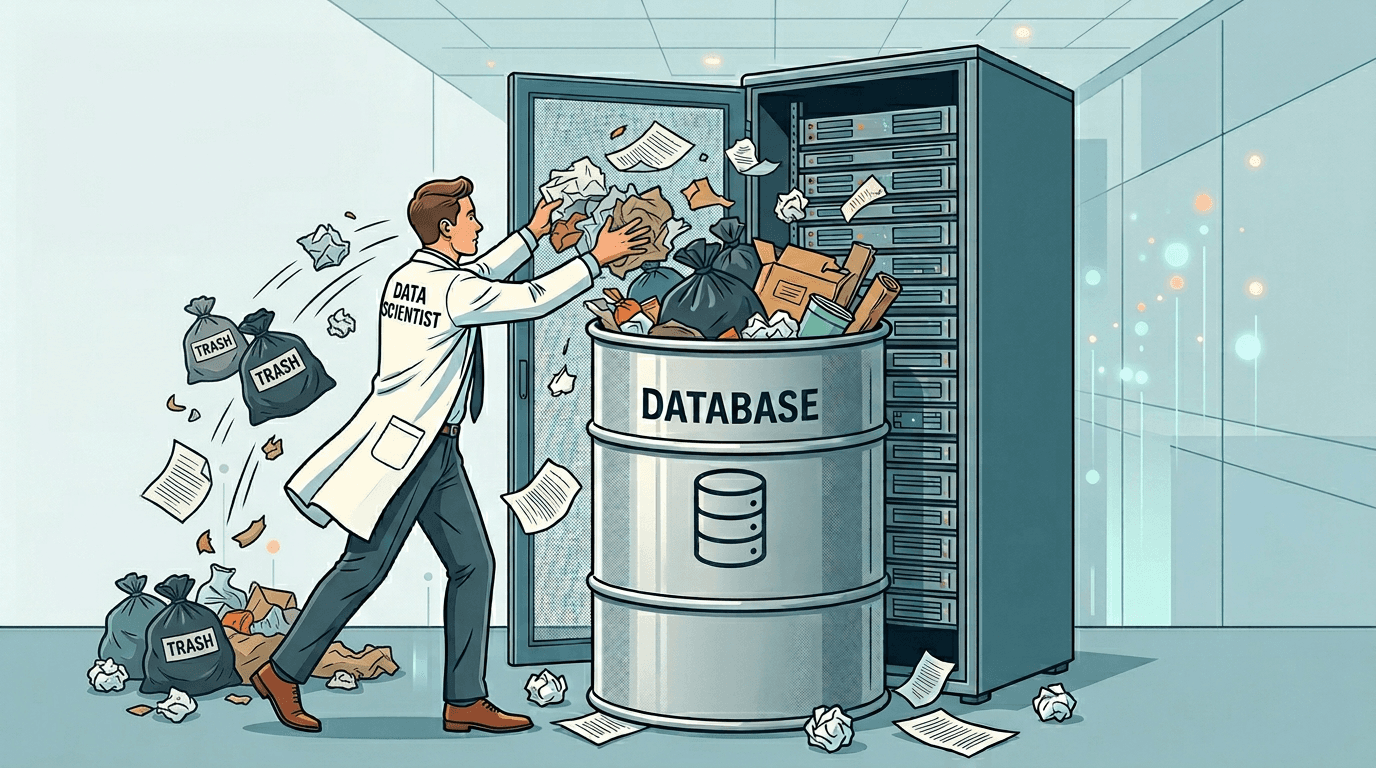
When a company isn't making good decisions, the reflexive answer is usually: "We need more data." More dashboards. More tracking. A bigger data warehouse. A better BI tool.
Sometimes that's true. But more often, data availability isn't the problem — and adding more of it won't help. In fact, it often makes things worse.
The organizations that make the best decisions aren't necessarily the ones with the most data. They're the ones who have solved the harder problems: organizational alignment, clear decision ownership, and a data culture that treats analytics as a business function rather than a reporting engine.
Here's what's actually broken when data isn't driving decisions — and what to fix instead.
1. Decision-makers are data skeptical (or just not interested)
This is the hardest problem and the one analytics teams are least equipped to solve. When senior stakeholders don't trust data — or don't want to use it — no amount of analytical output will change their behavior. They'll take the report, nod, and make the decision they were already going to make.
This is a political and cultural challenge, not an analytical one. It has to be addressed at a level above the data team: through leadership alignment, through hiring, and through holding decision-makers accountable for how they use evidence. Analytics teams that try to solve this by producing more data are treating the symptom, not the disease.
The first step is naming it clearly. Is the problem that your data isn't good enough, or that the people who should be using it have decided (consciously or not) that they won't? Those require completely different interventions.
2. Data outputs are misaligned with the decisions being made
Even when stakeholders genuinely want to use data, they can't act on it if it doesn't match their decision-making process. There are three common forms of misalignment:
Relevance. The metrics being tracked and reported don't directly answer the questions decision-makers are asking. A product team tracking DAU and session length can't use that data to decide whether to invest in a new feature if what they actually need to know is whether the feature will drive retention among high-LTV users.
Timing. Analytical outputs that arrive after the decision window has closed are useless. A weekly report on campaign performance doesn't help a marketing team that makes daily bidding decisions. Data has to be available when the decision needs to be made — not when it's convenient to produce.
Persistence. Even when data produces valuable insights, those insights are often ephemeral. A single analysis that changes a decision once, then gets forgotten, doesn't improve the organization's decision-making over time. Insights that aren't captured and built into institutional knowledge evaporate. The next team, or the next quarter's version of the same team, starts from scratch.
The fix to relevance and timing is working backward from decisions to data: start with the decision that needs to be made, identify what information would change that decision, and build the analytical system around that, not around what's easy to measure. The fix to persistence is building a knowledge base — a living repository of insights, documented decisions, and their outcomes — that accumulates value over time.
3. No one owns the decision
Data can be perfectly relevant, delivered at exactly the right time, and understood by everyone in the room — and still produce no action if it's unclear who is supposed to act on it.
Decision ambiguity is rampant in organizations with matrixed structures or unclear ownership models. An insight gets shared in a meeting. Everyone agrees it's important. Someone says "we should do something about this." The meeting ends. Nothing happens.
This isn't a data problem. It's a governance problem. Every significant decision that analytical output is supposed to drive needs an owner: a named person who is accountable for making the call and communicating it. Without that, data informs conversations but doesn't drive outcomes.
Analytical output should always be delivered with a clear framing of the decision it's meant to support: Who owns this call? What are the options? What happens if we do nothing? What are the costs of being wrong? These aren't questions the data team should be leaving for someone else to answer.
4. Too much data creates paralysis, not clarity
More data often doesn't help people decide — it helps people avoid deciding. When a business has 40 dashboards and 200 KPIs, decision-makers can almost always find a metric that supports whatever they were already inclined to do. This isn't malicious; it's human nature. More information increases optionality, and increased optionality makes decisions harder.
There's a version of this that's even more subtle: data-rich environments enable sophisticated cherry-picking. Teams learn to frame their analysis around the metrics that tell the most favorable story, and leadership learns to accept that framing because it confirms what they want to believe. Everyone is technically using data. Nobody is actually being disciplined about it.
The antidote is focus. Fewer metrics, not more. A clear hierarchy that distinguishes leading indicators from lagging ones, operational metrics from strategic ones. A shared agreement on what the north-star metrics are and a discipline to not let the proliferation of supporting metrics drown them out.
How to diagnose which problem you actually have
These four failure modes can look similar from the outside — the symptom in all cases is "data isn't being used" — but they require completely different interventions. The wrong diagnosis leads to the wrong fix, which either does nothing or makes things worse. Here's how to tell them apart.
If you suspect cultural resistance: Look for the pattern of data being requested but not acted on. Teams that are data skeptical will often go through the motions — they'll attend the analysis readouts, they'll ask questions, they'll nod along — but the decisions they make won't reflect what the data showed. The tell is the gap between what the analysis recommended and what actually happened. If that gap is consistently large, and the justifications given are vague ("we had other context," "the timing wasn't right"), cultural resistance is likely the root cause.
If you suspect misalignment: Look for the pattern of data being used, but for the wrong decisions. Teams that receive misaligned data don't usually ignore it — they answer the question the data is answering, rather than the question they actually needed answered. The tell is stakeholders who engage with analytical output but then immediately ask for something different: "This is interesting, but what I actually need to know is..." If you hear that phrase regularly, your reporting is measuring the wrong things.
If you suspect ownership ambiguity: Look for the pattern of insights that generate agreement but no action. The meeting goes well, everyone is aligned on what the data shows, and then nothing changes. The tell is following up two weeks later and finding that no one took the next step because everyone assumed someone else was responsible. This is particularly common in cross-functional analytics — when the insight spans marketing, product, and operations, none of the three teams feels fully accountable for the outcome.
If you suspect data overload: Look for the pattern of cherry-picking. This is the hardest to see because it's often invisible in the moment — the analysis that gets presented is always the one that tells the most favorable story, and it takes a broader view to notice that other analyses, which told less favorable stories, quietly disappeared. The tell is a retrospective one: look back at analyses from the past year and ask how many of them led to the conclusion "we should change course" versus "we're on the right track." If it's disproportionately the latter, the filtering is happening somewhere upstream of the final presentation.
Identifying the correct failure mode doesn't guarantee a fix. But it prevents the most common mistake: investing in more data infrastructure to solve a problem that isn't about data at all.
What to fix instead
If data isn't driving decisions in your organization, start by diagnosing which of these four problems you actually have — because each one requires a different solution.
If the problem is cultural resistance, address it organizationally, not analytically. If the problem is misalignment, work backward from the decisions that matter and redesign your reporting around them. If the problem is ownership ambiguity, build decision accountability into your governance model. And if the problem is data overload, ruthlessly simplify — cut the metrics that aren't changing decisions and double down on the ones that are.
More data is sometimes the answer. But it's rarely the first answer. Before you invest in more infrastructure, more tooling, or more reporting, make sure you understand why the data you already have isn't working. That's almost always the more valuable problem to solve.
Not sure which problem you have? That's what the Revenue Audit is for. Book yours free →